I wrote this article for BODY20. This page offers a new overview of its main points.
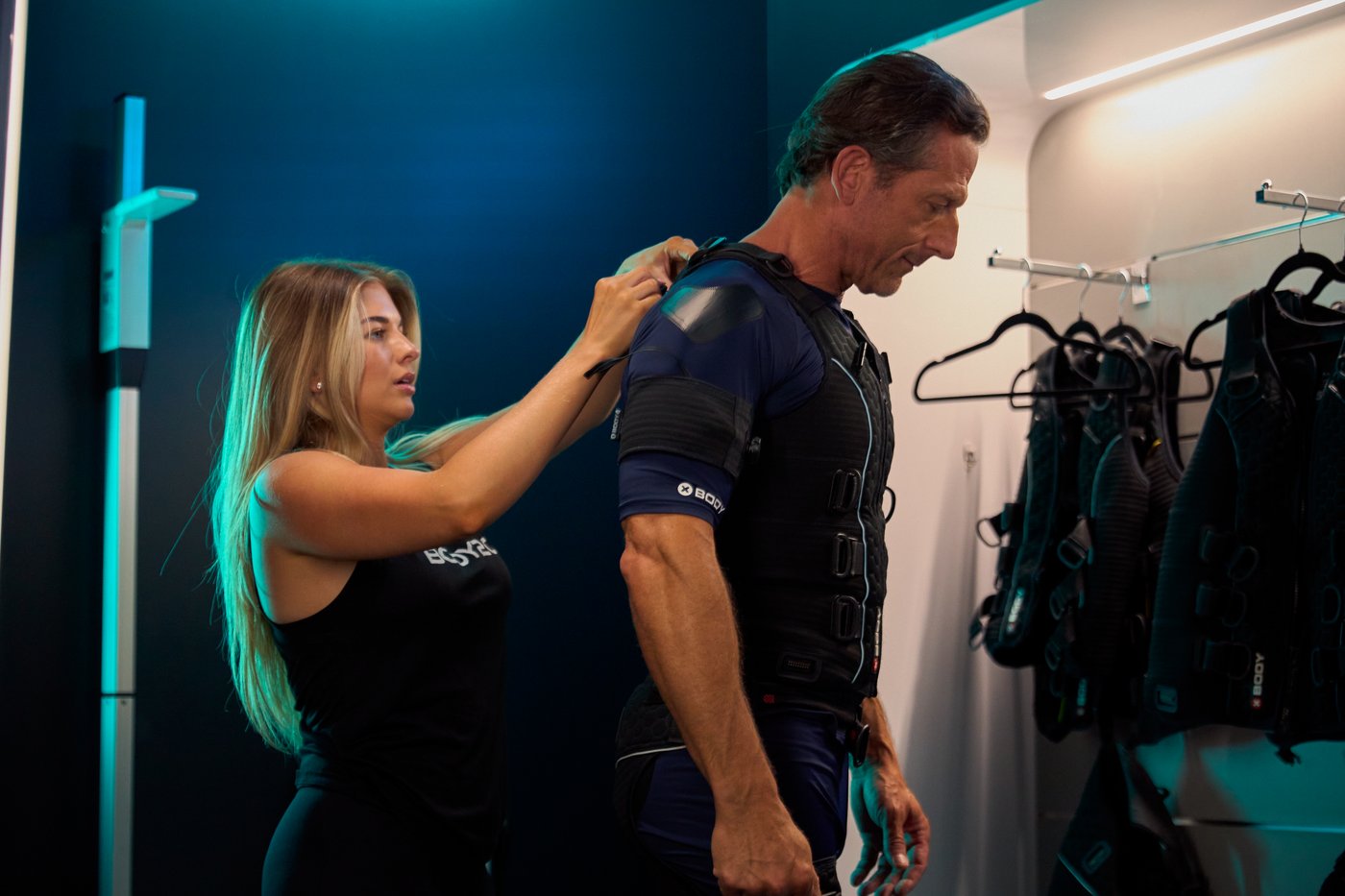
Returning to strength training after an injury can feel uncertain. This article examines how adjustable WB-EMS may provide a useful option when heavy external loading or unrestricted movement is not appropriate.
What the article explores
- Individually adjustable stimulation: A coach can change the impulse intensity for different body regions and select guided movements that respect the person’s current ability and clinical guidance.
- Knee osteoarthritis: The article reviews a 2024 randomized trial involving 72 adults and a related MRI analysis. The findings address pain, physical function, and observed cartilage changes over the study period.
- Chronic low back pain: Several trials and reviews have examined pain, function, and deep trunk muscle activation. The article also discusses research comparing short weekly WB-EMS sessions with a longer conventional back exercise program.
- Shoulder rehabilitation: The discussion includes the distinction between WB-EMS and localized NMES. Evidence from localized post surgical stimulation should not be presented as direct proof of the same result from a whole body suit.
The broader principle is that recovery still requires a gradual return to strength. The appropriate starting point, exercises, and intensity should come from qualified medical guidance and a coach who understands the person’s restrictions. This article is educational and is not a substitute for diagnosis or treatment.
Read the full article on BODY20
Read Training After Injury, including the complete research discussion, on BODY20.
If you are looking for an EMS trainer near you, please check The EMS Atlas.