
I wrote this article for BODY20. This page offers a new overview of its main points.
I approach this subject as an EMS professional, not a menopause specialist. My purpose in the article is to examine why strength and muscle deserve more attention during midlife and what WB-EMS research involving women can reasonably tell us.
What the article explores
- Muscle and metabolic health: Skeletal muscle supports movement, glucose disposal, energy expenditure, and physical independence. Hormonal changes during menopause make a deliberate strength strategy especially valuable.
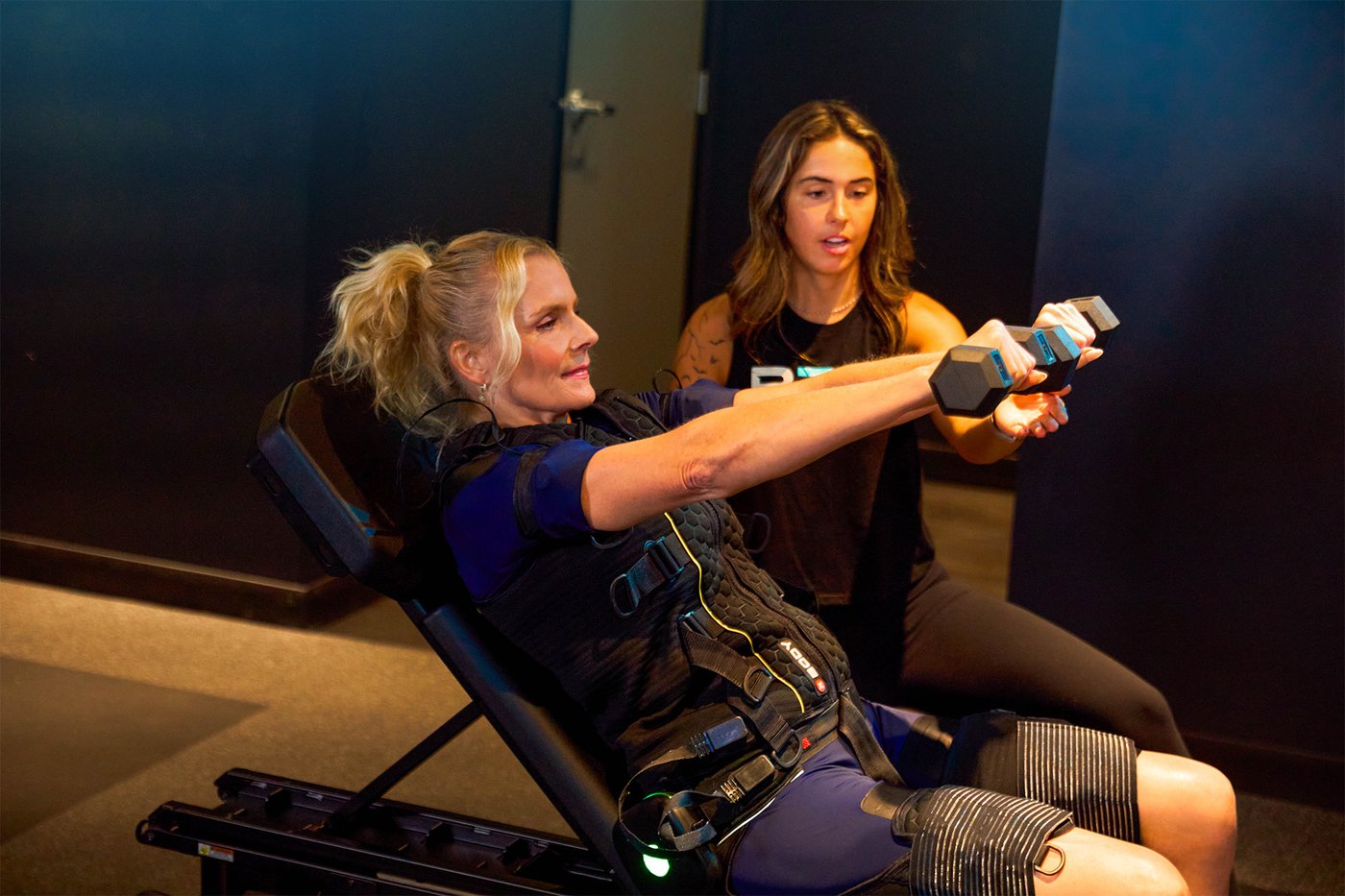
- A different way to create intensity: WB-EMS can produce strong muscular contractions without requiring heavy external weights. Intensity and movements can be adjusted around joint comfort and training experience.
- Research in premenopausal women: The article reviews a randomized trial involving 90 overweight women. The WB-EMS group had high adherence and was the only group to show a statistically significant improvement in its Metabolic Syndrome Z score from baseline.
- Research in postmenopausal women: Another trial involving 90 sedentary women reported improvements in leg strength, jump performance, gait speed, and peak oxygen uptake when weekly WB-EMS was added to an exercise program.
These findings are promising, but they do not make EMS a treatment for menopause or its symptoms. The practical message is to maintain a consistent, appropriately supervised strength program and to seek individualized medical guidance when needed.
Read the full article on BODY20
Read Staying Strong: WB-EMS and Menopause, including the expert perspectives and study links, on BODY20.
If you are looking for an EMS trainer near you, please check The EMS Atlas.